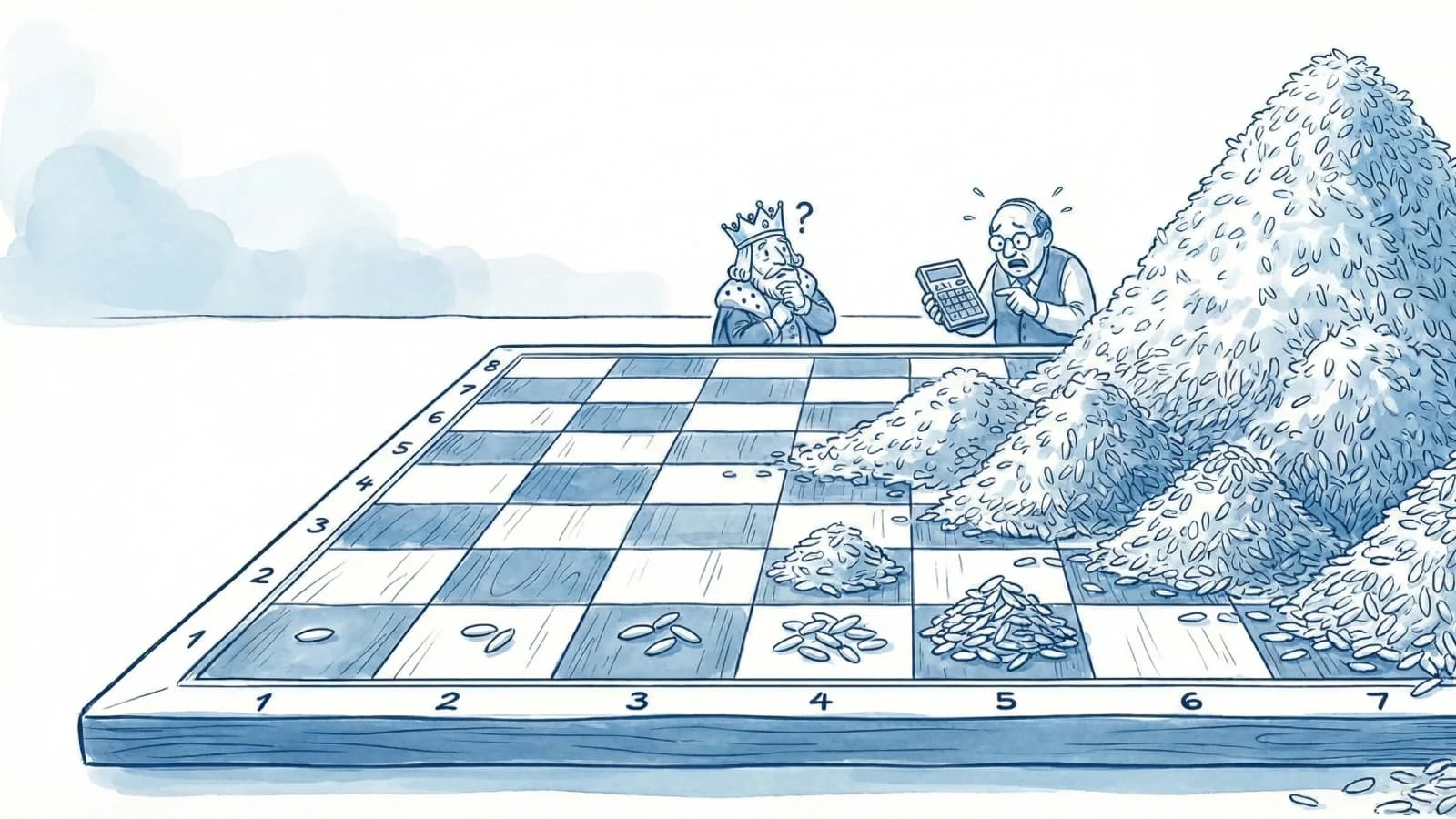
Exactly a year ago, Andrej Karpathy, co-founder of OpenAI and former head of AI at Tesla, introduced the concept of "vibe coding". A term for loosely experimenting with AI to generate code: you type a prompt, accept what comes out, and see if it works. It was creative, fast, and most of all fun. But also: fragile, unpredictable and rarely suitable for production.
On February 4, 2026, Karpathy marked the one-year anniversary of his own term - and immediately announced its successor. In a post on X he wrote:"Many people have tried to come up with a better name for this to differentiate it from vibe coding, personally my current favorite is 'agentic engineering'."
His explanation makes the difference crystal clear."Agent", he explains,"because the new default is that you are not writing the code directly 99% of the time, you are orchestrating agents who do and act as oversight."And"engineering"to emphasize"that there is an art & science and expertise to it. It's something you can learn and become better at, with its own depth of a different kind."
This is not a semantic game. It marks a fundamental shift in how technology is built - and who controls it.
From experimenting to orchestrating
2025 was the year in which AI-assisted development grew explosively. Collins Dictionary chose "vibe coding" as Word of the Year. Searches for the term increased by 6,700%. Y Combinator reported that nearly 25% of their Spring 2025 batch consisted of companies with codebases that were more than 95% AI generated. Cursor, the AI-native code editor, grew from $1 million to $500 million ARR in twelve months.
But the boundaries were also visible beneath the surface. The “vibe coding hangover” manifested itself in security issues, unmaintainable codebases, and industrial-scale technical debt. The Cloud Security Alliance warned that the non-deterministic nature of AI-generated code creates new challenges for DevSecOps. Vibecoding was great for demos and prototypes. It turned out to be inadequate for production systems.
2026 is the year that lesson is learned. The shift is not from more AI to less AI - it is from unstructured to disciplined use. From YOLO to architecture. From prompting to orchestrating.
What has changed?
Three developments make 2026 qualitatively different from 2025:
1. LLMs have gotten fundamentally better
The early 2025 models were good enough to impress, but not reliable enough for serious work. Karpathy himself acknowledges this:"At the time, LLM capability was low enough that you'd mostly use vibe coding for fun throwaway projects, demos and explorations. It was good fun and it almost worked."
A year later the landscape is unrecognizable. Models like Claude Opus 4.6, GPT-5.2-Codex and Gemini 3 aren't just smarter – they're better at long, complex tasks. They can navigate entire codebases, make architectural decisions, and execute multi-step workflows. Anthropic's own report shows that Rakuten engineers had Claude Code work on a 12.5 million line codebase - and achieved 99.9% numerical accuracy after seven hours of autonomous work.
2. MCP has standardized AI integration
The Model Context Protocol (MCP), launched by Anthropic at the end of 2024 as an open standard, has become the de facto standard for connecting AI systems with external tools and data sources in 2025. Think of USB-C for AI: one universal connector instead of customization per system.
OpenAI, Google DeepMind, Microsoft, GitHub - all have adopted MCP. There are now thousands of MCP servers available. In December 2025, the protocol was transferred to the Agentic AI Foundation under the Linux Foundation. The impact is enormous: MCP makes it practically feasible for developers to connect AI agents to databases, CRM systems, APIs and development environments - without building a custom integration for each system.
3. Multi-agent architectures have come of age
The evolution is from one AI assistant that helps write code to teams of specialized agents that work in parallel. Gartner reports a 1,445% increase in questions about multi-agent systems between Q1 2024 and Q2 2025. The pattern is similar to how microservices replaced monolithic applications: an orchestrator coordinates specialized agents – one for research, one for deployment, one for validation.
Gartner predicts that 40% of enterprise applications will include AI agents by the end of 2026, compared to less than 5% in 2025.
The new role of the engineer
What does this mean specifically for professionals who build technology?Anthropics2026 Agentic Coding Trends ReportExterne link(January 2026) summarizes it succinctly: developers now use AI in 60% of their work, but can only fully delegate 0-20% of tasks. The rest requires active monitoring, validation and human judgment.
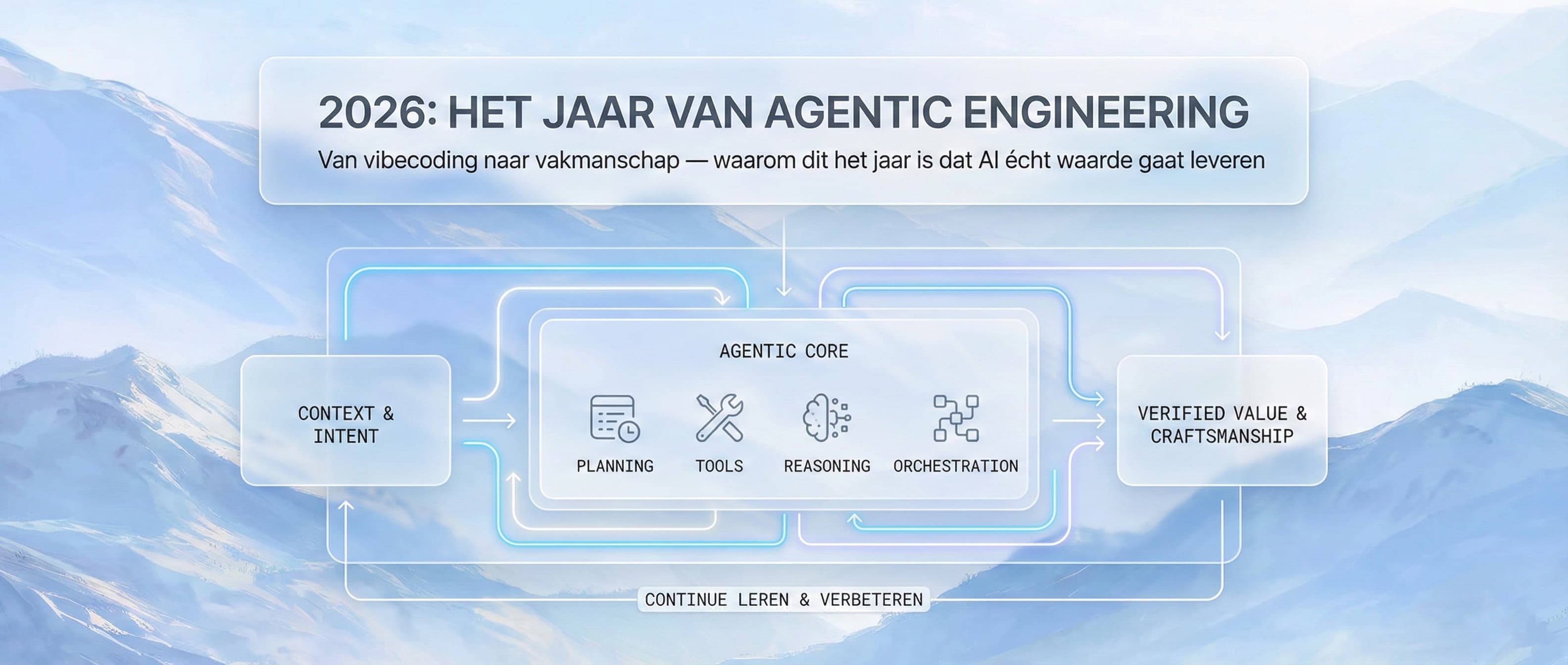
This is exactly the point. Agentic engineering is not automation - it is a new discipline. The engineer shifts from executor to architect and supervisor. You write less code, but you think more about systems, quality, security and context.
Addy Osmani, Google engineer and author of influential works on web performance, draws the line sharply:"Vibe coding = YOLO. Agentic engineering = AI does the implementation, human owns the architecture, quality, and correctness."
He adds an uncomfortable truth: agentic engineering disproportionately benefits senior engineers. Anyone who understands the fundamentals - system design, security patterns, performance tradeoffs - can use AI as a huge accelerator. But anyone who relies entirely on AI as a junior without building those foundations risks dangerous skills erosion.
The strategic urgency
The context in which this shift is taking place is not subtle. Dario Amodei, CEO of Anthropic, wrote in January 2026an essayof 20,000 words in which he warned that AI is killing humanity"almost unimaginable power"gives and that it"deeply unclear"is whether our systems have the maturity to wield that power.
Amodei's timeline is concrete: he expects AI systems with intellectual capabilities comparable to or higher than Nobel Prize winners - what Anthropic describes as"a country of geniuses in a data center"- can arise in"late 2026 or early 2027".
At the same time, he warns that AI is a"unusually painful"will cause disruption to the labor market because the impact will be broader and faster than previous technological shifts.
For organizations building or transforming technology with it, the message is clear: the quality of what you can build with AI will have fundamentally changed by 2026. But unlocking that quality requires discipline, expertise and a conscious approach.
What makes the difference in practice?
Based on the trends and experiences we see at thinkagain, agentic engineering differs from vibecoding in five crucial points:
1. Context is kingThe shift from "prompt engineering" to "context engineering" - the systematic design of the information you give to AI models - is perhaps the most important development of 2025-2026. MCP,agents.mdfiles, reference applications: it's not about better prompts, it's about better context.
2. Testing is the dividing lineThe biggest difference between vibecoding and agentic engineering is the role of tests. With a solid test suite, an AI agent can iterate until all tests pass, delivering high reliability. Without testing, an agent happily declares "done" on broken code.
3. Pre-deployment architectureAgentic engineering does not start with a prompt but with an architectural decision. Which tasks do you delegate? To which agents? With what quality criteria? How do you validate the result?
4. Security by designAs agents work more autonomously across larger codebases, security vulnerabilities can spread faster than human reviewers notice them.OWASPpublished their Top 10 for Agentic Applications in early 2026 - a sign that security has become a first-class concern.
5. Human judgment as a core competencyThe value isn't in typing code - it's in assessing, directing and validating what AI produces. This requires in-depth knowledge of the domain, the technology and the context in which a solution functions.
Conclusion: the promise becomes reality
2025 proved that AI can fundamentally change the way we build software. 2026 is the year when that promise becomes reality, but only for organizations and professionals who understand that the quality of the output is determined by the quality of the orchestration.
Karpathy sums it up optimistically:"In 2026, we're likely to see continued improvements on both the model layer and the new agent layer. I feel excited about the product of the two and another years of progress."
The question is no longer whether AI will transform the work of engineers. The question is whether you as a professional, as a team, as an organization develop the discipline and craftsmanship to lead that transformation instead of following it.
Agentic engineering is not a hype. It's a profession. And 2026 is the year to learn it.
Do you want to know how your organization can make the shift to agentic engineering? Contact us.