In recent weeks I have regularly said to my partner Erik: "This makes no sense at all." Not out of frustration, but out of surprise. Because I get things done that were simply impossible for me a few months ago. And I'm not a developer, not a tech person. I'm a marketer who is curious.
This is the story of how that curiosity took me from creating simple automations to building working applications and performing professional analyzes in a year and a half. Without being able to write a single line of code. And why I think that everyone who works with knowledge, regardless of field, must now ask themselves a few crucial questions.
But first: that Sinterklaas poem and that mediocre report from your colleague
Many people I speak to about AI base their judgment on an experience from a year or more ago. They had ChatGPT write a Sinterklaas poem for grandpa and it wasn't as good as they had hoped. Generic, without feeling, without the subtleties that make it funny. They concluded, “See, AI doesn't get it.”
They were right, but not for the reason they think.
There's also another reason why people write off AI. Look around you and you see what is now being called 'AI slop' everywhere. Articles or internal reports that look like a lot of effort has been put into them, but when read appear to be completely meaningless. LinkedIn posts that are neatly worded but say nothing, or say exactly what everyone else doing the same trick says. It looks impressive at first glance, but it's just mediocre output. People then think: if this is what AI delivers, what should I do with it?
The answer is the same as with that Sinterklaas poem: that output is not bad because AI is not possible, but because the human behind it has not put anything of themselves into it. No context, no direction, no expertise. AI slop is the result of laziness, not technology.
That poem wasn't bad because AI can't write. It was bad because it was written using a free and now hopelessly outdated model, without any context. The model was not in your group of friends for years. It was not present at that legendary championship celebration of your football team. It doesn't have the running gags, the mutual relationships, the teasing tone that makes the difference between a nice poem and a brilliant poem.
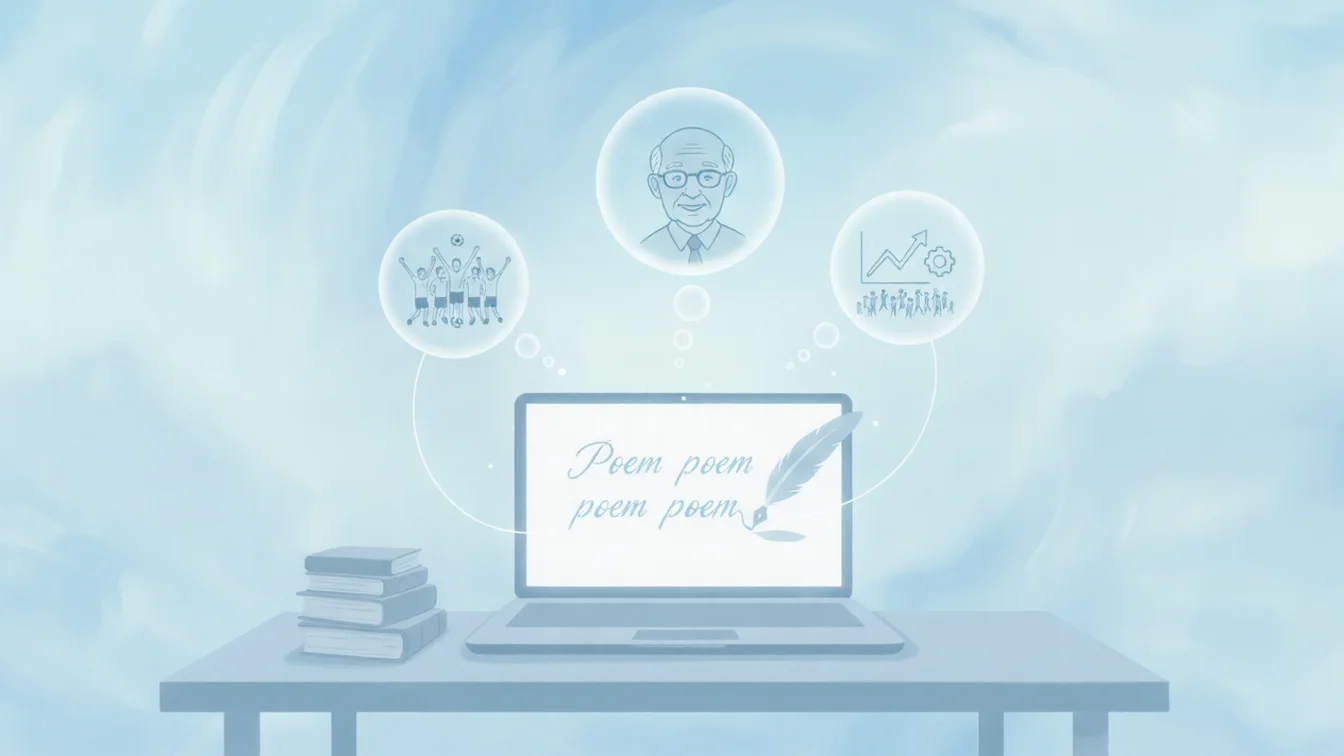
We have now reached a phase where AI can have that context. In which you can feed AI with background, style, preferences and specific knowledge. Where it no longer operates as a simple question-and-answer game, but as a system that accepts instructions, takes independent actions and returns with results that you provide feedback on. That is a fundamentally different model than what most people have in mind, and not to create great Sinterklaas poems, but to do your work better, smarter and faster. And that changes a lot.
My journey: from screenshots to systems
My own path with AI went through phases that I only recognized as such in retrospect.
At first it was just chatting. ChatGPT, Claude, Gemini, Copilot, you name them. I used it, among other things, to write texts for 360 Scouting, a company I co-own. I thought those texts were fine, but Marco, the founder and someone who, unlike me, actually knows about football scouting, rightly indicated every time that what I wrote was just not right. Frustrating, but also educational, because this illustrates the point: without the right context and professional knowledge, AI produces neat but superficial output. Exactly that AI slop I was just talking about.
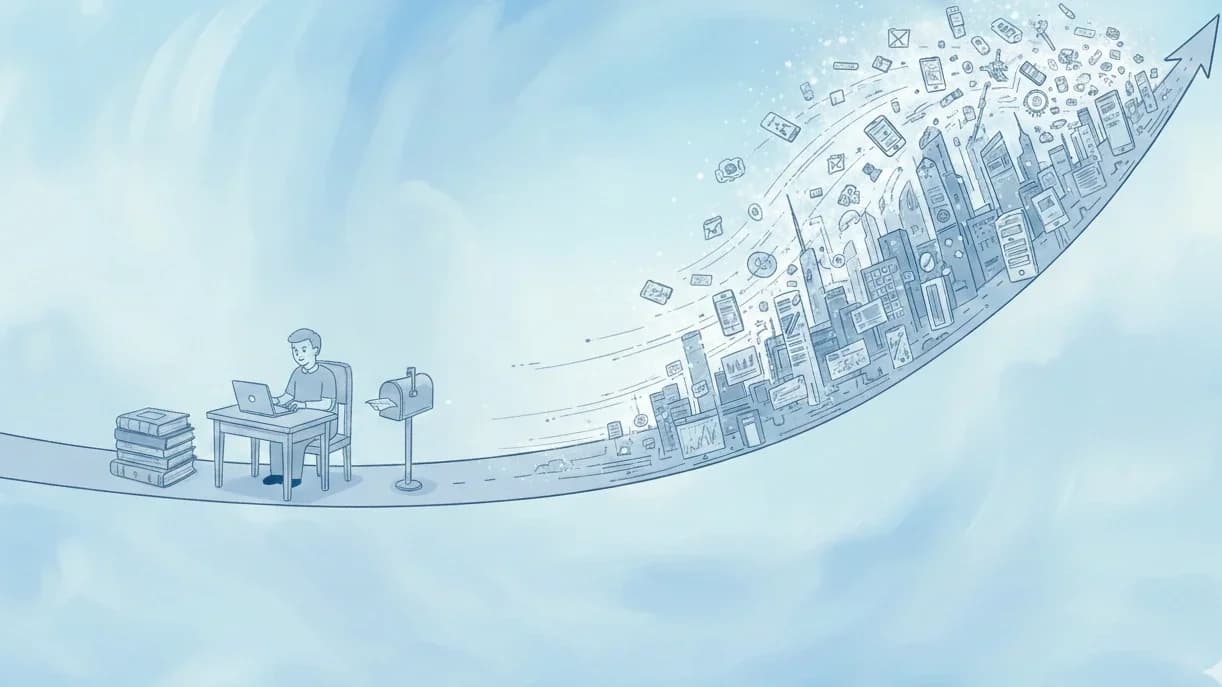
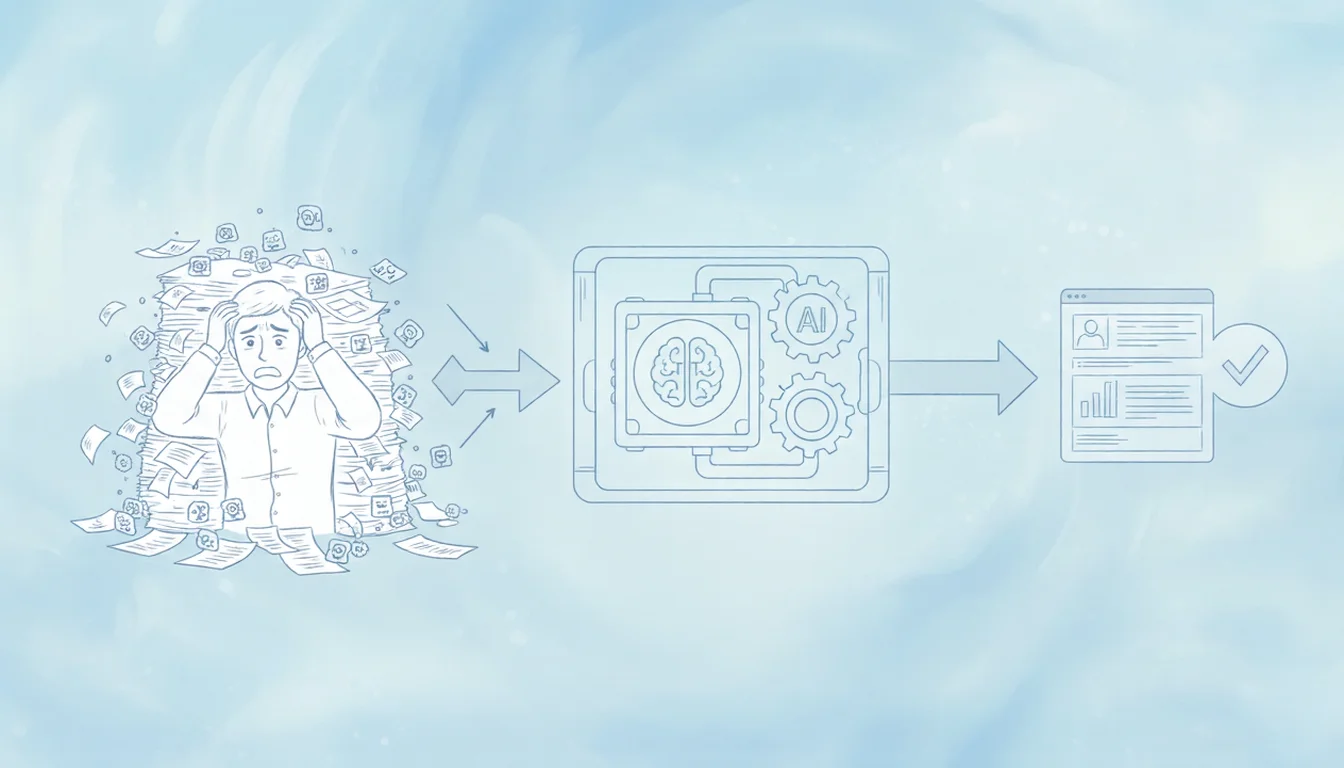
Then things started to get more serious. I was frustrated by the amount of time repetitive simple tasks were taking me, so I built automations to automate those tasks. Think of linking systems, automatically processing data, streamlining workflows. My method was not very refined: watch a few hours of YouTube instructions and get started. Whenever I got stuck, I threw screenshots of error messages into ChatGPT asking what to do next. It worked, and every day I am still happy that I run these automations because of the time and effort it saves me.
Later I really wanted to delve deeper into it and bought an online course that took me a lot further. That course only really landed because I had been messing around on my own for months. The combination of first doing it yourself and then acquiring targeted knowledge turned out to be the fastest way for me, and that applies to everything I have learned with AI: gaining experience yourself and calling in someone at the right time to help you.
Then I discovered what AI could do for analysis. With tools like NotebookLM and Perplexity, I was able to gain insights in a fraction of the time that would previously have taken hours or even days. I conducted competitive analyses, delved into market developments and found patterns that I would never have seen manually.
Then I slowly started building apps and sites with AI. With Lovable I built internal dashboards that looked good enough. Things only got really interesting when I recently met Cursor, through Erik. Suddenly I could not only build interfaces, but working applications and websites. I can't code, but I can clearly formulate what I need, why, and for whom. And that increasingly appears to be enough.
Now I am in a phase that I would not have thought possible six months ago. With tools such as Cowork and Cursor, I perform analyses, create presentations in the right corporate identity and tone of voice, and realize projects that were unthinkable for me as a non-technical person until recently. AI does work at least as well as I could, and in many areas better and much faster. And in addition, I am now also taking up projects that I had not even started before because it would take too much time.
Hence that statement against Erik. “This doesn't make any sense at all.” Because the result is so absurdly good and quickly realized that you almost cannot believe what is happening.
No experts, but experienced experts
This field is so new that there are hardly any real experts. What you do see a lot are AI watchers: people who follow every new model release, share the best demos and tell you that everything is going to change. That's fine and it keeps you informed, but it's not the same as actually applying it in your work.
The real experts are there, but they are rarely the loudest voices. These are the people who have been applying AI to their work for months, who try things out, get stuck, start over and slowly understand what works. They just don't shout about it all the time, because they are too busy actually doing it.
What these people have in common: they combine AI with their own professional knowledge. They not only know which button to press, but also understand why a certain approach works in their specific context. They understand that a good prompt does not start with the technique, but with clearly formulating your goal.
You don't have to become an AI expert. You have to become an expert by experience. Just test it, free up a few hours and play around. Combine basic AI and IT skills with the substantive knowledge of your field and you have something that no tool alone can provide.
Work is going to change. Yours too
Let me make it concrete from my own profession. An important part of my work as a marketer has always consisted of two things: drawing up smart strategies and executing those plans. Making plans, seeing connections that someone else does not see, writing content, setting up campaigns, analyzing results, making adjustments.
Both planes are now touched. AI can make strategic analyzes based on data that I would never have been able to process manually. It can produce content that is almost immediately publishable, provided you set the right context in advance. It can analyze campaign results and make improvement suggestions that I would have come up with myself, but in minutes instead of hours.
Of course, a good marketer does more than devise and implement plans. But if AI can do such important parts so well, and developments are happening so quickly, what does that mean for the rest of your work in a year's time?
What does this mean for your work a year from now?
This is not just about marketing, but about almost all knowledge workers. If your job involves analyzing information, making decisions based on that analysis, and producing output in some form, then this story applies to you too, whether you are a lawyer, consultant, accountant, or communications professional.
Isn't that dangerous? I get that question often and the honest answer is: it certainly can be. About the social impact, about what this means for jobs, about the ethical questions, about what could happen if malicious parties start doing this and whether we are not becoming too dependent on a few large American tech companies. We need to have that conversation and I want to have it too. But this article is about whether you know what is possible right now, because you can only have a good conversation about the consequences if you first understand what is happening.
The questions you should ask yourself
You can label AI as hype and ignore it. Or write off the entire development based on that one disappointing experience. Or think that you are really so unique and good that technology can never replace that. All possible, but I wouldn't do it.
What you can do: talk to that one colleague who is already a lot further along in the use of AI. Not the one who sent you that AI slop report, but that other smart colleague. And take out a paid subscription yourself so that you can use the latest models, because they are truly incomparable to what you saw a year ago. Be curious. Start testing, not with toy questions, but with real tasks from your real work.
And ask yourself this question:What must AI be able to do to significantly change my work?Formulate it as concretely as possible, because not "AI must become smarter" but: what exactly should it do? Which task, which process, which problem?
What does AI need to be able to do to significantly change my work?
The follow-up question that is perhaps even more important:What if it turns out that this is already possible?Because at the rate this is going, there is a good chance that what you now think is impossible will soon be very normal.
And finally:What if you don't take action, but your competitor does?That first question forces you to think clearly about your own work. The second forces you to get moving. The third to realize what is at stake.
I don't have the answers to those questions for you. But if you need help taking action, that's why we founded Think again. Not because we are the experts, but because we are curious, understand how marketing teams work and do nothing other than gain experience.